What Is an Estate Cleanout — and Why Is It So Hard?
An estate cleanout is the process of clearing out all or most of the belongings from a home — typically after a death, a move to assisted living, a divorce, or a major life transition. In Plymouth and across Sheboygan County, estate cleanouts are one of the most emotionally and logistically demanding tasks families face. The combination of grief, time pressure, family dynamics, and sheer volume of accumulated belongings can make even the most organized person feel completely overwhelmed.
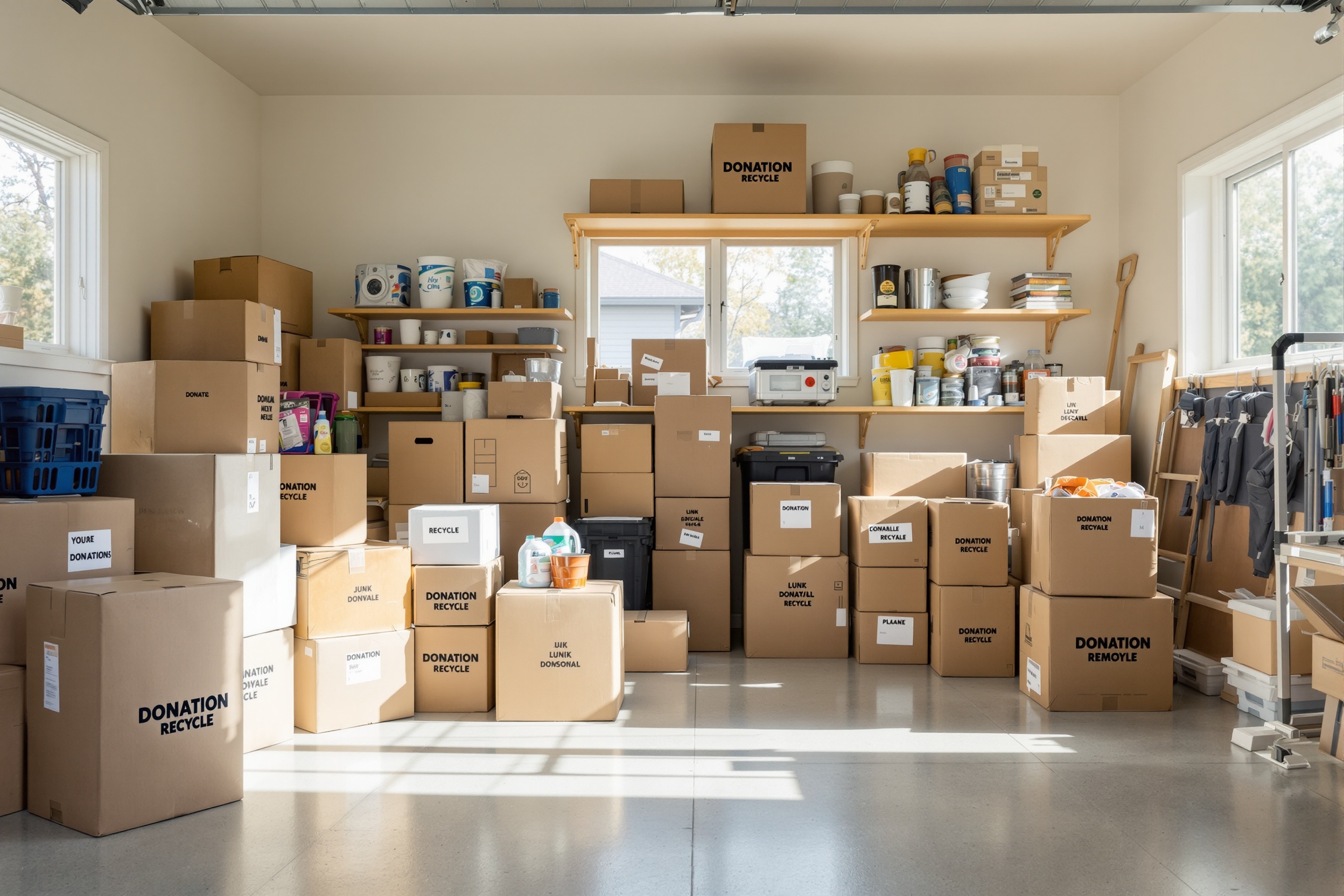
The practical reality is that most Wisconsin estate cleanouts involve homes where belongings have accumulated over 30, 40, or 50 years. Basements hold forgotten furniture and appliances. Attics contain boxes that have not been opened since the 1980s. Garages are packed with tools, equipment, and seasonal items. Closets hold clothing from multiple decades. The scope is almost always larger than families anticipate — and the emotional weight of sorting through a loved one's possessions makes every decision harder than it would otherwise be.
Professional estate cleanout services exist precisely for this situation. They handle the physical labor, the logistics, the donation coordination, and the disposal — allowing families to focus on the emotional work of grieving and transitioning rather than the exhausting work of hauling and sorting. This guide explains exactly what to expect from a professional estate cleanout service in Plymouth, how to prepare, what questions to ask, and how to make the process as smooth as possible for your family.
Related Services
When to Hire a Professional Estate Cleanout Service
Not every estate cleanout requires professional help. If the home is small, the volume of belongings is manageable, and family members have the time and emotional capacity to handle the work themselves, a DIY approach with a junk removal pickup at the end is entirely reasonable. But several situations make professional estate cleanout services genuinely worth the investment.
Volume is the most common trigger. A three-bedroom home with a full basement, a two-car garage, and 40 years of accumulated belongings is not a weekend project for a family of four. Professional estate cleanout crews can clear a home of this size in one to two days — work that would take a family team two to three weeks of weekends. When time is a factor — a property sale closing, a lease end date, or a family that has traveled from out of state — professional speed is invaluable.
Emotional capacity is the second trigger. Sorting through a parent's or spouse's belongings is grief work, and it is genuinely exhausting. Many families find that they can handle the sentimental items — the photos, the jewelry, the meaningful keepsakes — but the sheer volume of ordinary household goods becomes overwhelming. Professional crews handle the ordinary items efficiently and respectfully, allowing family members to focus their limited emotional energy on the decisions that matter most.
Pro Tips
- Consider professional help if the home has more than 3 bedrooms or a full basement
- If family members are traveling from out of state, professional speed is worth the cost
- Emotional exhaustion is a valid reason to hire help — it is not a failure
- Professional services often complete in 1-2 days what takes families 2-3 weeks
What a Professional Estate Cleanout Service Actually Does
A full-service estate cleanout company handles every stage of the process from initial assessment through final property preparation. The scope varies by company and by the specific needs of each estate, but a comprehensive service typically includes: initial walkthrough and assessment, sorting and categorizing all items, coordinating donation pickups with local charities, routing recyclable materials to appropriate facilities, hauling away all remaining items for disposal, and leaving the property broom-clean.
The sorting process is where professional estate cleanout services add the most value beyond simple junk removal. Experienced crews can quickly identify items with donation value, items with potential resale value, items requiring special disposal (electronics, appliances with Freon, hazardous materials), and items that are simply ready for disposal. This sorting expertise prevents the common mistake of disposing of donatable or valuable items simply because the family is overwhelmed and does not have time to assess everything carefully.
Donation coordination is a significant part of what distinguishes estate cleanout services from standard junk removal. Professional services maintain active relationships with Goodwill, Habitat for Humanity ReStore, St. Vincent de Paul Society, and other Plymouth-area charities. They know what each organization accepts, when they have capacity, and how to schedule pickups efficiently. This means your loved one's usable belongings go to families in Sheboygan County who need them — a meaningful legacy that standard disposal does not provide.
- Initial walkthrough and scope assessment
- Systematic sorting: keep, donate, recycle, dispose
- Donation coordination with Plymouth-area charities
- Electronics and e-waste routing to certified recyclers
- Appliance removal with EPA-certified Freon recovery
- Hazardous material identification and proper disposal routing
- Full property haul-out and disposal
- Broom-clean property preparation
How to Prepare for an Estate Cleanout Service
The more preparation you do before the estate cleanout crew arrives, the more efficiently the project goes — and the more control you retain over the items that matter most. The single most important preparation step is to remove items you want to keep before the crew arrives. Walk through the property and physically move or clearly mark every item that family members are claiming. Use colored tape, sticky notes, or a simple room-by-room list. Anything not marked as "keep" is fair game for the crew to sort and remove.
Secure important documents before the crew arrives. This means a targeted search for: the will and any codicils, property deeds and titles, insurance policies, financial account statements, tax returns, Social Security cards, birth certificates, passports, and military records. These documents should be removed from the property on your first visit, before anyone else has access. Financial documents in particular create identity theft risk if left unsecured.
If you have identified items that might have significant value — antiques, collectibles, jewelry, vintage tools, fine art — set them aside for professional appraisal before the cleanout begins. A local antique dealer, estate sale company, or online appraiser can provide quick assessments. The cost of an appraisal is almost always recovered through better sale prices, and the alternative is potentially disposing of something worth hundreds or thousands of dollars.
Pro Tips
- Mark or remove all "keep" items before the crew arrives — anything unmarked may be sorted for removal
- Secure all important documents on your first property visit, before the cleanout begins
- Set aside potential valuables for appraisal before scheduling the cleanout
- Provide the crew with a clear list of any items requiring special handling
Related Services
Identifying Hidden Valuables in Estate Cleanouts
Estate cleanouts in Plymouth and Sheboygan County regularly uncover items of unexpected value — and the families who take time to assess before disposing consistently recover more value than those who rush through the process. The categories with the highest likelihood of hidden value in Wisconsin estate cleanouts include: antique and mid-century furniture, vintage tools and hand tools, vintage electronics and audio equipment, coins and currency, jewelry and watches, vintage clothing and accessories, and collectibles of all kinds.
Vintage American-made hand tools — Stanley, Disston, Starrett, and other mid-20th century brands — have strong collector markets. A set of vintage chisels, a quality hand plane, or a collection of precision measuring tools can sell for $20–$200 per piece to the right buyer. Before any tools go to donation or disposal, do a quick search on eBay sold listings to assess value. The same principle applies to vintage kitchen items, vintage sporting goods, and vintage household goods from the mid-20th century.
Do not overlook financial instruments. Savings bonds, stock certificates, and old insurance policies found in estate cleanouts sometimes have real current value. Savings bonds issued decades ago may have matured to significant amounts. Stock certificates for companies that have merged or been acquired may be redeemable. Old insurance policies may have cash value. Before disposing of any financial documents, have them reviewed by the estate attorney or a financial professional.
- Antique and mid-century furniture: especially solid wood pieces from pre-1970
- Vintage hand tools: American-made brands have strong collector markets
- Coins and currency: old coins, silver dollars, and foreign currency may have collector value
- Jewelry and watches: always appraise before donating or disposing
- Vintage electronics and audio: turntables, amplifiers, vintage radios
- Savings bonds and stock certificates: may have current financial value
- Vintage clothing and accessories: certain eras and brands have collector appeal
- Original artwork: always appraise before any disposal decision
Handling Hazardous Materials in Wisconsin Estate Cleanouts
Older Wisconsin homes — particularly those built before 1980 — frequently contain hazardous materials that require specialized disposal. This is not optional: Wisconsin DNR regulations and federal EPA rules prohibit disposing of many common household chemicals, electronics, and certain building materials in regular trash or landfills. Professional estate cleanout services identify these materials during the sorting process and route them to appropriate disposal channels.
The most common hazardous materials found in Plymouth-area estate cleanouts: old paint cans (latex and oil-based), automotive fluids (motor oil, antifreeze, brake fluid), pesticides and herbicides, cleaning chemicals, batteries, fluorescent bulbs, and propane tanks. All of these require disposal through Sheboygan County's Household Hazardous Waste program — not the trash, not the recycling bin, and not poured down the drain.
Homes built before 1978 may contain lead-based paint, and homes built before 1980 may contain asbestos in floor tiles, ceiling tiles, and pipe insulation. If you suspect either material, do not disturb it — contact a certified inspector before proceeding with any renovation or demolition work. Professional estate cleanout services are trained to identify potential asbestos and lead paint concerns and will flag them for your attention rather than disturbing them.
- Paint (latex and oil-based), stains, varnishes: Sheboygan County HHW program
- Automotive fluids: motor oil, antifreeze — auto parts stores accept for free recycling
- Pesticides and herbicides: HHW program only
- Batteries (all types): free recycling at auto parts stores
- Fluorescent bulbs and CFLs: Home Depot, Lowe's, or HHW collection events
- Propane tanks: hardware stores or propane suppliers for exchange/disposal
- Suspected lead paint or asbestos: certified inspector required — do not disturb
Donation Coordination: Honoring Your Loved One's Legacy
One of the most meaningful aspects of a professional estate cleanout is the opportunity to ensure that your loved one's belongings continue to serve others in the Plymouth and Sheboygan County community. Donation is always the highest-value outcome for items in good, usable condition — it extends the life of goods, supports local charitable organizations, and provides a tangible legacy that disposal does not.
Habitat for Humanity ReStore in Fond du Lac is the strongest local option for furniture, working appliances, and building materials. Every donated item directly funds affordable housing construction in Wisconsin — a donated sofa or working refrigerator from an estate cleanout might fund $50–$200 worth of housing materials. Goodwill's Sheboygan location accepts clothing, household goods, small furniture, and working electronics. St. Vincent de Paul Society in Plymouth accepts clothing, household items, and small furniture, with proceeds supporting local families in need.
For large quantities of furniture and appliances, professional estate cleanout services coordinate donation pickups directly with these organizations — eliminating the need for family members to make separate donation trips. Always request itemized donation receipts for tax deduction purposes. Donated items can be deducted at fair market value on the estate's federal tax return, which can meaningfully offset the cost of professional cleanout services.
Related Services
Estate Cleanout Costs in Wisconsin: What to Expect
Estate cleanout costs in Plymouth and Sheboygan County vary based on the size of the home, the volume of items, the presence of specialty items requiring special handling, and the level of service required. A small apartment or condo cleanout with minimal belongings might cost $300–$600. A standard three-bedroom home with a full basement typically runs $800–$1,500. A large home with a garage, outbuildings, and significant volume can run $1,500–$3,000 or more.
Several factors can increase costs beyond the base estimate: appliances containing Freon (require certified recovery), electronics requiring certified e-waste recycling, hazardous materials requiring special disposal, items in difficult-to-access locations (tight basement stairwells, upper-floor bedrooms with narrow hallways), and properties requiring multiple truck loads. Disclosing all of these factors when requesting a quote ensures an accurate estimate rather than a surprise on service day.
The cost of professional estate cleanout services should be weighed against the alternatives. A family team handling the same project might spend 40–80 hours of labor over multiple weekends, plus the cost of renting a dumpster or making multiple junk removal trips. When the value of family members' time is factored in — particularly for family members who have traveled from out of state — professional services are often cost-competitive with the DIY alternative, and dramatically less emotionally exhausting.
Pro Tips
- Get quotes from at least two services — compare scope of service, not just price
- Disclose all specialty items (appliances, electronics, hazardous materials) when requesting quotes
- Ask whether donation coordination and recycling routing are included in the base price
- Request itemized donation receipts — the tax deduction can offset a significant portion of the cost
Related Services
Wisconsin Estate Law: What You Need to Know Before Disposing of Anything
Before any estate cleanout begins, it is essential to understand the legal framework governing the estate. Wisconsin estate law has specific requirements for property disposition, creditor notification, and estate settlement timelines that affect what can be disposed of, when, and by whom. Disposing of estate assets before the estate is properly settled can create personal liability for the executor or administrator.
If the estate is going through probate, certain property disposals may require court approval. The executor has a fiduciary duty to the estate's beneficiaries and creditors — disposing of assets at below-market value, or disposing of assets that should have been used to pay creditors, can result in personal liability. Consult with a Wisconsin estate attorney before scheduling any cleanout if the estate is in probate or if there are outstanding debts, disputes among beneficiaries, or uncertainty about the estate's legal status.
For estates that are not in probate — small estates that qualify for Wisconsin's simplified procedures, or estates where all assets pass directly to beneficiaries through joint ownership or beneficiary designations — the legal constraints are less complex. But even in these cases, it is worth a brief consultation with an estate attorney to confirm that the cleanout can proceed without legal complications. The cost of a one-hour attorney consultation is trivial compared to the potential liability of proceeding incorrectly.
Pro Tips
- Consult a Wisconsin estate attorney before disposing of significant assets
- Probate estates may require court approval for certain disposals
- Keep records of all items donated, sold, or disposed of during the cleanout
- Get itemized donation receipts for all charitable donations
Choosing the Right Estate Cleanout Service in Plymouth, WI
Not all estate cleanout services are equal, and choosing the right one makes a significant difference in the experience and outcome. The most important qualities to look for: experience with estate cleanouts specifically (not just general junk removal), a clear donation and recycling policy, EPA 608 certification for Freon recovery, transparent pricing with no hidden fees, and verifiable references or reviews from previous estate cleanout clients.
Ask specifically about donation practices. A service that simply hauls everything to a landfill is not providing the same value as one that actively sorts for donation and coordinates with local charities. Ask: "What percentage of items from a typical estate cleanout do you donate versus dispose of?" A reputable service should be able to answer this question with a specific number and name the organizations they work with.
Clutter Relief has served Plymouth and Sheboygan County families through estate cleanouts for years. We understand the emotional weight of this work and approach every estate cleanout with the respect and care that families deserve. Our crews are trained to identify donation-worthy items, handle hazardous materials correctly, and complete the project efficiently so families can move forward. Contact us for a free, no-obligation estate cleanout assessment.
- Experience with estate cleanouts specifically — not just general junk removal
- Active donation partnerships with Plymouth-area charities
- EPA 608 certification for Freon recovery on cooling appliances
- Transparent, itemized pricing with no hidden fees
- Verifiable reviews from previous estate cleanout clients
- Willingness to work around family schedules and emotional needs
After the Cleanout: Preparing the Property for Sale or Transfer
Once all items have been removed, the property needs thorough cleaning before it can be sold, rented, or transferred. This goes beyond standard cleaning — estate properties often have areas that have not been cleaned in years, and the removal of furniture and appliances reveals accumulated dust, grime, and sometimes damage that needs addressing.
Professional cleaning services are worth the investment for estate properties. They have the equipment and expertise to handle deep cleaning of carpets, hard floors, windows, bathrooms, kitchens, and appliances efficiently. For properties with significant odors — smoke, pets, moisture — professional odor remediation may be necessary before the property is marketable. Address minor repairs and maintenance issues identified during the cleanout: leaky faucets, broken fixtures, damaged walls, and non-functioning light switches. These small repairs have outsized impact on property value and buyer perception.
Finally, be aware that Wisconsin's cold winters can cause rapid deterioration in vacant properties — frozen pipes, ice dams, and heating system failures are common in unoccupied homes. Ensure the property is properly winterized if it will be vacant through the winter months, and arrange for regular check-ins to catch problems before they become expensive emergencies. A property management company or trusted neighbor can provide this oversight at minimal cost.
Estate Cleanout Resources in Plymouth and Sheboygan County
Having a ready reference for local resources makes the estate cleanout process significantly more manageable. The following organizations and services cover the most common needs — from donation drop-offs and hazardous waste disposal to professional cleanout services and estate legal guidance.
For families managing estate cleanouts from out of state, professional full-service estate cleanout companies are the most practical solution. A single appointment handles sorting, donation coordination, recycling, and disposal logistics — eliminating the need to coordinate multiple trips to multiple facilities during a limited visit to Plymouth.
- Habitat for Humanity ReStore Fond du Lac — furniture, working appliances, building materials
- Goodwill Sheboygan — clothing, household goods, small furniture, working electronics
- St. Vincent de Paul Society Plymouth — clothing, household items, small furniture
- Sheboygan County Recycling Center — electronics, appliances, metals, hazardous waste
- Sheboygan County HHW Program — paint, chemicals, automotive fluids, propane tanks
- E-Cycle Wisconsin — free electronics drop-off statewide (ecyclewisconsin.org)
- Wisconsin State Bar Lawyer Referral Service — estate attorney referrals
- Clutter Relief Plymouth — full-service estate cleanout, same-day available
Ready to Schedule Your Estate Cleanout in Plymouth, WI?
Clutter Relief provides compassionate, full-service estate cleanouts throughout Plymouth and Sheboygan County. We handle everything — sorting, donation coordination, recycling, and disposal — so your family can focus on what matters most. Free quotes, same-week scheduling available.
About the Author
Mike Johnson has over 12 years of experience helping Wisconsin families navigate estate cleanouts with compassion, efficiency, and professionalism. He specializes in providing practical guidance for the logistical and emotional challenges of estate clearing in Plymouth and Sheboygan County, with deep knowledge of local donation resources, recycling facilities, and Wisconsin estate regulations.