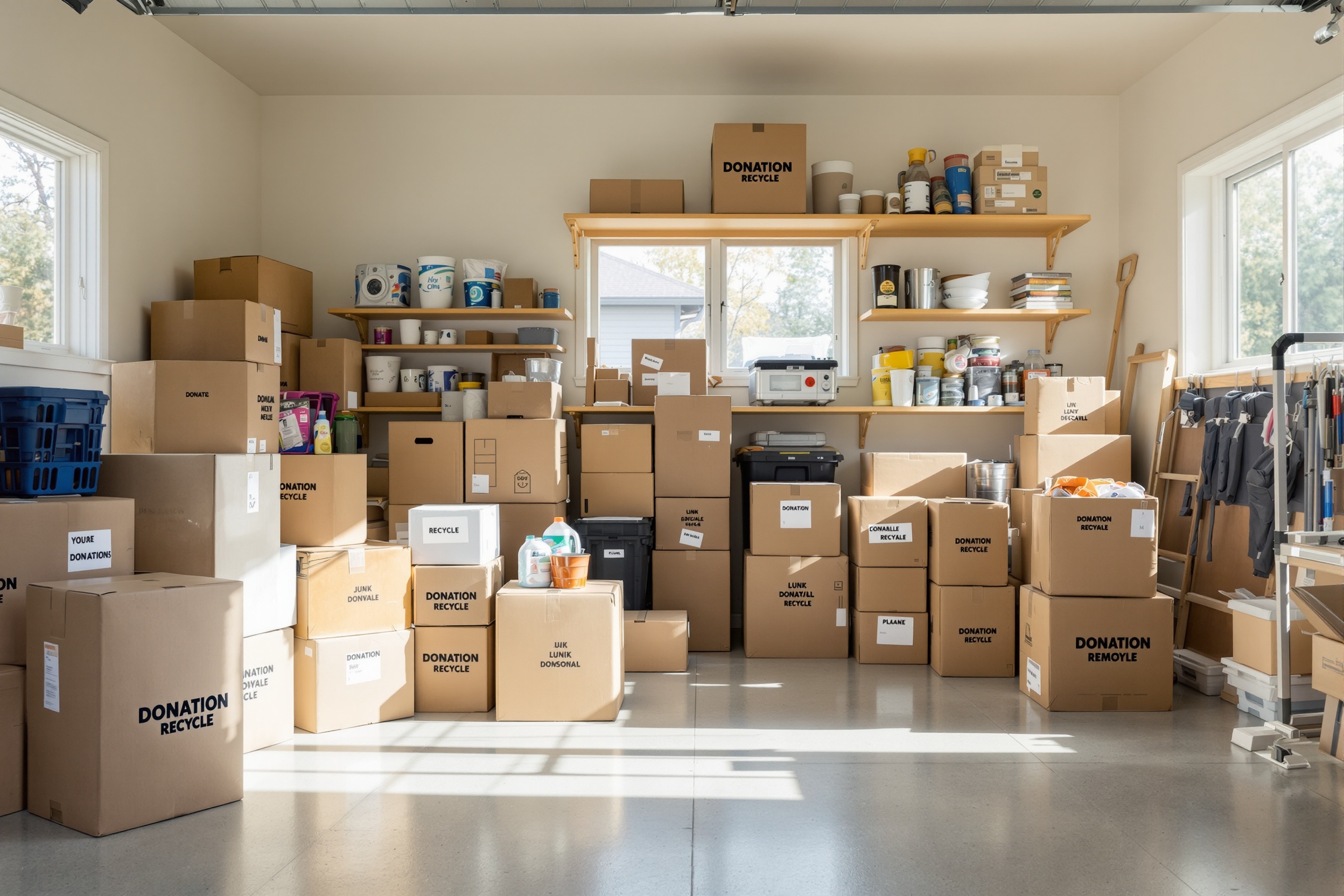
Why Wisconsin's Seasons Are Your Decluttering Advantage
Wisconsin's four distinct seasons aren't just a weather phenomenon — they're a natural decluttering calendar. Each season creates specific household needs, generates specific types of clutter, and offers specific opportunities for junk removal, donation, and organization. Plymouth homeowners who align their decluttering efforts with seasonal rhythms accomplish more with less effort than those who try to tackle everything at once.
The practical reality of Wisconsin living is that seasonal transitions generate clutter automatically. Winter gear comes out in October and needs to go somewhere. Summer furniture comes in from the patio in November. Holiday decorations go up in December and need storage in January. Spring cleaning reveals what accumulated over winter. Without a seasonal system, this constant churn of items creates progressive clutter that eventually requires a major, overwhelming cleanout.
This month-by-month guide gives Plymouth and Sheboygan County homeowners a practical framework for staying ahead of clutter year-round — with specific advice for working with Wisconsin weather, timing donations for maximum community impact, and knowing when to call professional junk removal services versus handling things yourself.
January and February: The Indoor Opportunity
January and February are Wisconsin's most challenging months for outdoor activity, but they're ideal for indoor decluttering projects. Post-holiday clarity — the contrast between the clutter of holiday decorations, gifts, and gatherings and the clean, organized home you want — provides powerful motivation. Use it.
Start with holiday decorations immediately after the season ends. Sort through ornaments, lights, and decorations critically: what did you actually use this year? What has been in the box for three or more years without being displayed? Donate or dispose of unused decorations rather than storing them for another year of non-use. Invest in proper storage containers for items you're keeping — organized storage prevents the "I can't find it so I'll buy another one" cycle that creates duplicate clutter.
January and February are also excellent months for basement and attic decluttering. These spaces accumulate items that were "temporarily" stored and never retrieved. The cold weather outside makes the basement feel less unpleasant than it does in summer heat, and the post-holiday motivation is at its peak. Set a goal of filling at least one truck load or dumpster from basement and attic spaces during these two months.
- Sort and purge holiday decorations immediately after the season
- Declutter basement storage areas — target items stored more than 2 years
- Attic organization: remove items that haven't been accessed in 3+ years
- Closet audit: winter clothing assessment, donate what you didn't wear this season
- Indoor furniture evaluation: identify pieces to replace or remove in spring
- Electronics and media: old DVDs, CDs, outdated electronics, unused gadgets
Pro Tips
- Use the post-holiday motivation window — it's strongest in the first two weeks of January
- Schedule indoor junk removal during January-February for best availability and rates
- Donate winter clothing now so it reaches people who need it this season
- Set a "two-year rule" for basement storage: if it's been there two years untouched, it goes
March and April: Spring Cleaning with Purpose
Spring is Wisconsin's most popular decluttering season, and the psychological pull toward renewal and fresh starts is real and powerful. But spring cleaning without a plan often results in moving clutter from one location to another rather than actually removing it. The key is to combine the motivational energy of spring with a systematic approach that results in items actually leaving your property.
March is transition month — the weather is unpredictable, but indoor projects are fully accessible. Focus on garages and mudrooms, which accumulated winter gear, salt, sand, and general disorder over the past five months. Sort through winter equipment: what needs repair, what's been replaced, what you no longer use. Broken snow blowers, worn-out sleds, and outdated winter sports equipment should be disposed of rather than stored for another season.
April brings more reliable weather and the ability to tackle outdoor spaces. This is the optimal time for major junk removal projects in Plymouth — mild temperatures, low humidity, and the full motivation of spring make April ideal for garage cleanouts, basement hauls, and outdoor debris removal. Book junk removal services early in April, as demand peaks in late April and May when everyone has the same idea simultaneously.
- Garage deep clean: sort winter equipment, dispose of broken items, organize remaining
- Mudroom and entryway: winter gear assessment, donate unused items
- Outdoor furniture inspection: repair, donate, or dispose of damaged pieces
- Yard debris removal: winter damage, fallen branches, accumulated outdoor clutter
- Basement spring assessment: follow up on January/February work
- Major appliance evaluation: identify appliances to replace before summer
Pro Tips
- Book April junk removal early — it's the busiest month in Sheboygan County
- Combine garage and basement cleanouts into one pickup to maximize truck space
- Donate spring and summer clothing now so it's available when needed
- Address outdoor furniture before summer — repair or replace before the season starts
Related Services
May and June: Outdoor Focus and Garage Sales
May and June offer Plymouth's best weather for outdoor decluttering projects. Yards, patios, decks, gardens, and outdoor storage areas that were inaccessible during winter are now fully available. This is the time to address outdoor clutter that accumulated over multiple seasons: broken lawn equipment, old grills, damaged patio furniture, accumulated yard waste, and outdoor toys and recreation equipment that children have outgrown.
May and June are also prime garage sale season in Sheboygan County. Longer days, pleasant weather, and high foot traffic make weekend garage sales effective for liquidating items with resale value. Price items realistically — the goal is to move them, not to maximize per-item revenue. Items that don't sell at the garage sale should go directly to donation or junk removal rather than back into storage.
For lawn and garden equipment, May is the time to assess what's working and what needs replacement. A lawn mower that required three repair visits last season, a string trimmer that won't start reliably, or a garden tiller that's been replaced by a newer model — these items should be disposed of rather than stored "just in case." Broken power equipment takes up significant garage space and rarely gets repaired once it's been set aside.
- Patio and deck furniture: repair, donate, or dispose of damaged pieces
- Lawn and garden equipment: assess condition, dispose of unreliable equipment
- Outdoor toys and recreation: donate items children have outgrown
- Garage sale: price to sell, donate or dispose of unsold items immediately
- Garden shed organization: dispose of broken tools, expired chemicals
- Pool and water recreation equipment: assess condition before summer use
July and August: Major Projects and Pre-Fall Preparation
July and August are Wisconsin's hottest months, which makes heavy physical work less comfortable — but they're also the months with the longest days and the most available time for major projects. Use the long summer days for large-scale cleanouts that require multiple days of work: whole-garage overhauls, major basement projects, or multi-room furniture replacements.
Summer is the optimal time for major furniture removal and replacement projects. If you're redecorating a bedroom, replacing living room furniture, or clearing out a home office, summer's long days and dry weather make furniture removal and delivery logistics easier. Schedule junk removal for old furniture on the same day as new furniture delivery to minimize the time your space is in transition.
August is also the time to start thinking about fall preparation. What outdoor items will need to come inside for winter? What storage space will they need? Clearing that storage space now — before the fall rush — prevents the frantic scramble of trying to find space for winter gear while simultaneously dealing with fall cleanup. A little forward planning in August makes October significantly less stressful.
Pro Tips
- Schedule heavy outdoor work for morning hours to avoid peak summer heat
- Coordinate furniture removal and delivery on the same day
- Start clearing winter storage space in August before fall rush
- Donate summer items to shelters and community organizations before fall
September and October: The Pre-Winter Window
September and October are arguably the best months for junk removal in Plymouth, Wisconsin. Temperatures are mild, humidity is low, precipitation is manageable, and the ground is firm — ideal conditions for outdoor work and truck access. This pre-winter window is the last reliable opportunity for major outdoor cleanouts before Wisconsin weather makes them difficult.
Fall is the time to address appliances and large items that you've been meaning to dispose of all year. A refrigerator in the garage that's been running empty, an old washing machine in the basement, a broken chest freezer — these items should be removed before winter, when cold temperatures can complicate appliance removal and outdoor access becomes challenging.
Pre-winter garage organization is a fall priority for most Plymouth homeowners. The garage needs to accommodate winter vehicles, snow removal equipment, and winter sports gear. Items that don't belong in the winter garage — summer furniture, lawn equipment, outdoor toys — need to be stored, donated, or disposed of. This is also the time to dispose of any lawn equipment that didn't survive the summer season.
- Major appliance disposal: refrigerators, freezers, washers, dryers
- Garage winter preparation: clear space for vehicles and snow equipment
- Outdoor furniture: store quality pieces, dispose of damaged ones
- Lawn equipment: final assessment, dispose of unreliable equipment
- Pre-holiday decluttering: clear space for holiday decorations and gatherings
- Yard waste: final cleanup before first freeze
Pro Tips
- Book fall junk removal in September — October availability fills quickly
- Dispose of appliances before first freeze complicates outdoor access
- Clear garage space for winter vehicles before November
- Donate fall and winter clothing now for maximum community impact
Related Services
November and December: Holiday Prep and Post-Holiday Reset
November and December present a decluttering paradox: the holiday season brings new items into the home (gifts, decorations, seasonal goods) while simultaneously being the hardest time to find motivation for disposal. The solution is to declutter before the holidays rather than after — creating space for incoming items rather than trying to find space after they've arrived.
Early November is ideal for pre-holiday decluttering. Clear the spaces where holiday decorations will go. Assess your current decoration inventory before pulling it all out — what did you actually use last year? What has been in storage for multiple years? Donating unused decorations before the holiday season means they can benefit others this year rather than sitting in your storage for another year.
The week between Christmas and New Year's is one of the most productive decluttering windows of the year. The contrast between holiday abundance and the desire for a fresh start in the new year creates powerful motivation. Use this window to sort through gifts (what will you actually use?), assess what the holiday season revealed about your storage needs, and plan your January decluttering projects.
- Pre-holiday: clear decoration storage spaces, assess current inventory
- Pre-holiday: donate items to make room for anticipated gifts
- Post-holiday: sort gifts immediately — keep what you'll use, donate the rest
- Post-holiday: dispose of holiday decorations you didn't use this year
- Year-end: assess what the year revealed about your storage and organization needs
- Plan January projects: identify spaces to tackle in the new year
Year-Round Habits That Prevent Overwhelming Accumulation
Seasonal decluttering addresses the major accumulation cycles, but year-round habits prevent the smaller accumulations that add up between seasonal projects. The most effective habit is the "one in, one out" rule: every time a new item enters your home, an equivalent item leaves. New shirt? Donate an old one. New kitchen appliance? Dispose of the one it's replacing. New furniture? Schedule removal of the old piece.
Maintain a permanent donation box in a convenient location — a closet, the garage, or near the back door. When you encounter an item you no longer need or use, it goes directly into the donation box rather than back into storage. When the box is full, it goes to Goodwill or St. Vincent de Paul. This continuous donation habit prevents the accumulation that makes seasonal cleanouts overwhelming.
Schedule quarterly mini-decluttering sessions — one weekend per quarter (March, June, September, December) focused on one specific area of your home. These 4-8 hour sessions are manageable, maintain momentum between major seasonal projects, and prevent any single area from becoming overwhelmingly cluttered. Over a year, four quarterly sessions plus seasonal attention to specific areas keeps a Plymouth home consistently organized without requiring marathon cleanout weekends.
Pro Tips
- Implement "one in, one out" for all new purchases
- Keep a permanent donation box in a convenient location
- Schedule quarterly mini-sessions: one area, one weekend, four times per year
- Donate immediately rather than storing items for "someday" donation
Related Services
When to Call Professional Junk Removal vs. DIY
Not every decluttering project requires professional junk removal. Small quantities of items that fit in your vehicle can be taken directly to donation centers or the Sheboygan County Recycling Center. Items with resale value are worth the time investment of garage sales or online listings. And regular donation box drop-offs handle the continuous stream of smaller items efficiently.
Professional junk removal makes sense when: the volume exceeds what you can transport yourself (more than a few carloads), items are too heavy to move safely without equipment (appliances, large furniture, exercise equipment), items require specialized disposal (electronics, appliances with Freon, hazardous materials), or when your time is more valuable than the cost of professional service.
For Plymouth homeowners, the calculation often favors professional junk removal for seasonal cleanouts that generate significant volume. A full garage cleanout, a basement haul, or a post-estate-sale disposal typically involves enough volume and heavy items to make professional service cost-effective compared to multiple DIY trips. Many Sheboygan County junk removal companies offer same-day service, making it easy to schedule around your decluttering timeline.
Related Services
Building Your Plymouth Seasonal Decluttering Calendar
The most effective approach to year-round decluttering is a written calendar that assigns specific projects to specific months. This transforms decluttering from a reactive response to overwhelming clutter into a proactive system that keeps your Plymouth home consistently organized.
Your calendar doesn't need to be elaborate — a simple list of monthly focus areas is sufficient. The key is committing to it before the year begins, when motivation is high and the projects feel manageable. Review and adjust the calendar each December based on what worked, what didn't, and what new projects the coming year will bring.
Wisconsin's seasons will always generate clutter cycles. The question is whether you're managing those cycles proactively with a seasonal system, or reactively with periodic overwhelming cleanouts. The homeowners who maintain the most organized, clutter-free homes in Sheboygan County aren't the ones who do the biggest cleanouts — they're the ones who do consistent, small-scale maintenance that prevents big cleanouts from ever being necessary.
- January-February: Basement, attic, holiday storage, indoor closets
- March-April: Garage, mudroom, spring cleaning, major junk removal
- May-June: Outdoor spaces, patio, lawn equipment, garage sales
- July-August: Major furniture projects, summer outdoor, pre-fall prep
- September-October: Appliance disposal, garage winter prep, pre-holiday clearing
- November-December: Holiday prep, post-holiday reset, year-end planning
About the Author
Emily Chen is a professional organizer and seasonal living specialist with 10 years of experience helping Plymouth and Sheboygan County homeowners develop sustainable, year-round decluttering systems. Her Wisconsin-specific approach accounts for the state's unique seasonal challenges and community resources, helping families maintain organized, functional homes without the stress of periodic overwhelming cleanouts.